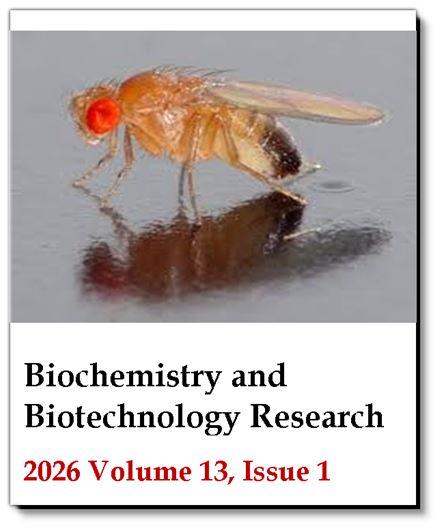
Biochemical response in Drosophila melanogaster infected with Aspergillus niger and treated with the methanolic stem extracts of Terminalia species
Longchi Satkat Zacchaeus, Ngochal Gamdang Ngolar, Patricia Ene Ejembi and Ponchang Apollos WuyepBiotechnology and Biochemistry Research
Published: February 2 2026
Volume 13, Issue 1
Pages 1-11
DOI: https://doi.org/10.5281/zenodo.18456951
Abstract
Aspergillus niger is an opportunistic fungal pathogen capable of inducing oxidative stress, tissue damage, and persistent infection in susceptible hosts, posing significant clinical and public health challenges. Drosophila melanogaster is a well-established model for investigating host–pathogen interactions and evaluating therapeutic agents due to its conserved immune and biochemical pathways. Species of the genus Terminalia are rich in bioactive phytochemicals and possess antimicrobial and antioxidant properties; however, their antifungal and biochemical modulatory effects against A. niger remain poorly characterized. This study evaluated the biochemical and antifungal effects of methanolic stem bark extracts of Terminalia catappa, Terminalia mantaly, and Terminalia avicennioides in D. melanogaster infected with A. niger. Stem bark samples were extracted by cold maceration in methanol. Phytochemical screening was conducted using standard procedures, while antioxidant activity was assessed in vitro using the 2,2-diphenyl-1-picrylhydrazyl (DPPH) radical scavenging assay. Acute toxicity was evaluated by exposing adult flies to diets containing 6.25–100 mg/mL of each extract. Virgin female flies were infected by ingestion of A. niger and treated with sub-lethal (LD50-based) doses of the extracts. Data were analyzed using one-way ANOVA at p ≤ 0.05. Phytochemical screening revealed abundant tannins, flavonoids, phenols, and saponins in all extracts, with variable alkaloids and steroids. T. avicennioides showed the highest antioxidant activity (41.95 ± 0.07% to 80.50 ± 0.33%), comparable to ascorbic acid. Acute toxicity tests indicated that T. catappa was the most toxic (LD50 = 62.47 mg/mL), while T. avicennioides was the least toxic (LD50 = 134.62 mg/mL). All extracts significantly improved survival of infected flies, with T. avicennioides producing the highest survival rate (77.77%). Biochemical analyses showed elevated malondialdehyde in T. mantaly, increased superoxide dismutase in T. catappa, and enhanced glutathione levels in T. avicennioides. Overall, methanolic extracts of Terminalia species, particularly T. avicennioides, demonstrated strong antifungal and antioxidant effects in D. melanogaster, supporting their potential as natural agents against fungal-induced oxidative stress.
Keywords: Antioxidant activity, Aspergillus niger, Drosophila melanogaster, phytochemical modulation, Terminalia species.
Full Text PDF